The sleep targeted neuromodulation platform to improve lives
TOSOO AXORA is our investigational non-invasive platform designed to measure and modulate sleep. Across indications, it enables longitudinal medical-grade EEG monitoring and therapeutic closed-loop auditory stimulation at home.







PROBLEM
Poor Sleep is a driver of disease, not just a symptom
Sleep is increasingly recognized as a primary driver of systemic disease, not merely a consequence of it. Disrupted sleep dysregulates the biological processes that underpin cardiovascular, metabolic, and cognitive health, with measurable consequences at a population level.
20–30%
Of adults chronically affected by sleep loss or sleep disorders [1]
7 / 15
Leading causes of death linked to poor sleep [2,3]
30%
Higher dementia risk with persistent short sleep at ages 50, 60, and 70 [4]
€423B
Annual cost of sleep disorders in Europe (25% of all neurological disease costs)[1]
Sleep as modifiable target
The sleeping brain is active, measurable, and modifiable
During sleep, the brain enters a highly active and restorative state, measurable via EEG and modifiable through targeted intervention.

Solution
We built the end-to-end platform to modulate and measure the brain’s activity


Built for Long-Term Use
Soft, lightweight, washable textile. Validated in studies of 18+ months. Available in sizes from children to adults — so every participant gets a perfect fit.
A non-invasive platform for sleep targeted neuromodulation
The TOSOO AXORA headband captures medical-grade EEG and uses closed-loop algorithms to detect target sleep stages and deliver auditory stimuli via built-in headphones. This enables targeted modulation of sleep features, such as slow-wave activity.
Wavescope manages your study end to end: participant and device management, double-blinded sham-controlled study setup, automated data quality checks, and full raw EEG data access, all in one place.
Complete system
Long-term wear
Stimulation protocol
End-to-end support
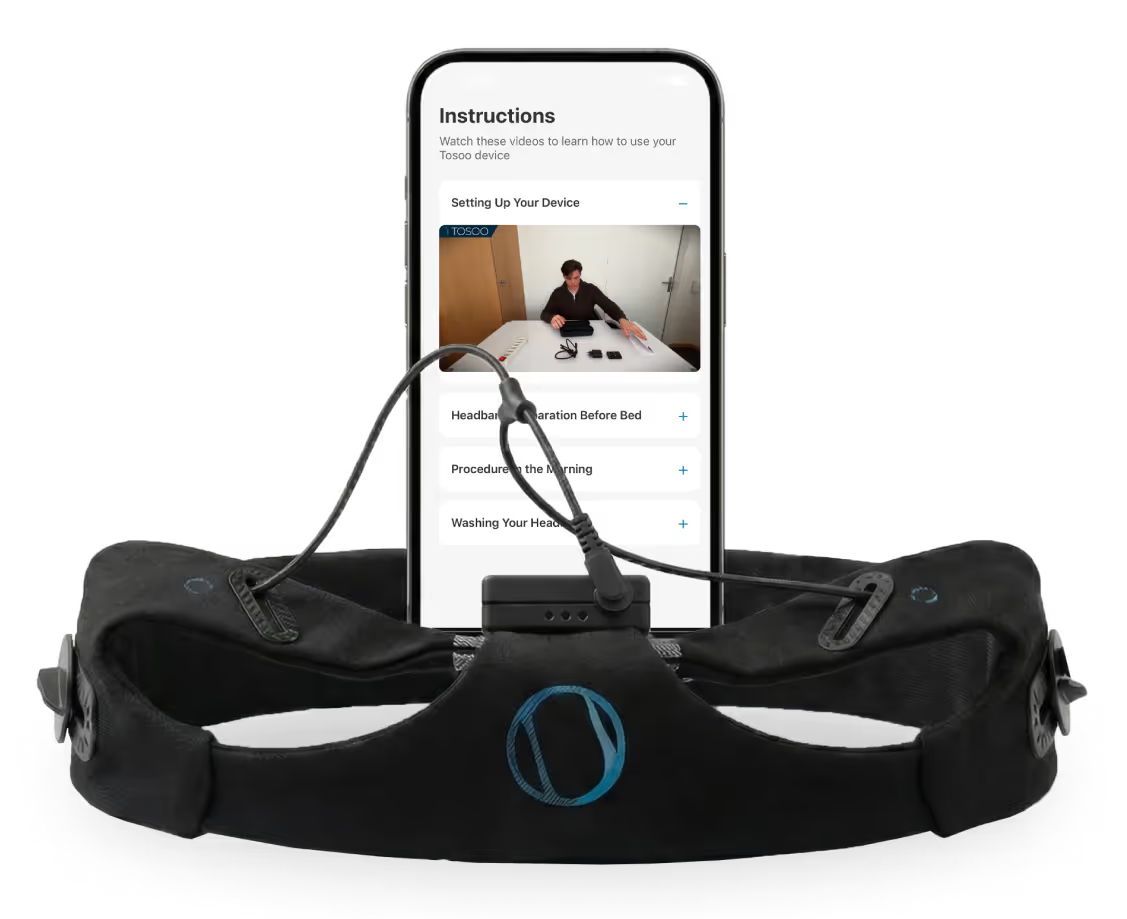





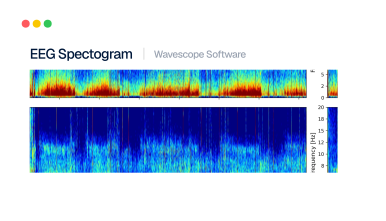
TOSOO AXORA
Closed-loop auditory stimulation
Built for Long-Term Use
Soft, lightweight, washable textile. Validated in studies of 18+ months. Available in sizes from children to adults — so every participant gets a perfect fit.
AXORA EEG
At-home Sleep Monitoring
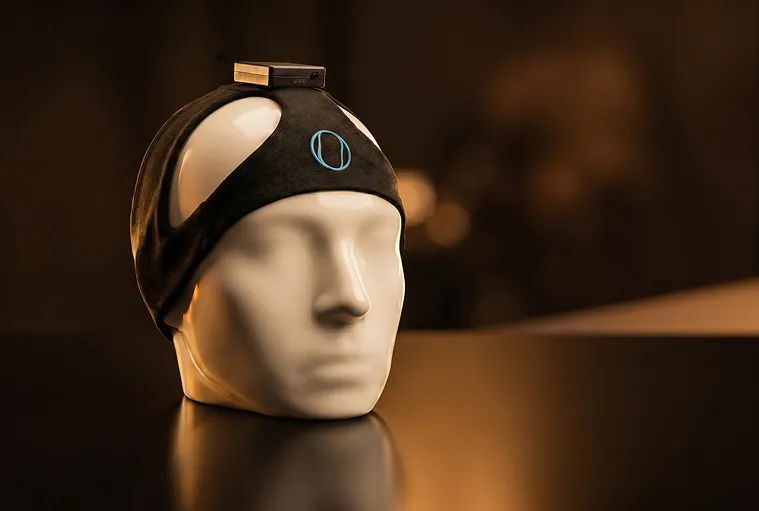


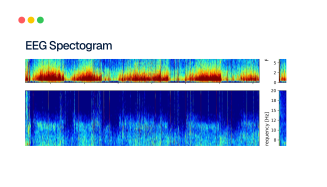


At-Home EEG Monitoring for longitudinal studies
The AXORA EEG headband records medical-grade EEG continuously at home, giving your study access to a full range of sleep endpoints — from sleep staging and continuity to microstructure measures like slow-wave power and sleep spindle density.
Precision wet-electrodes and a mobile amplifier ensure signal quality on par with PSG, in a form factor participants actually keep wearing.
Complete system
Long-term wear
EEG channels
Medical-grade signal
WHY USE TOSOO AXORA?
Built by researchers and
validated in the field
Dropout rate
Data capture rate
Rated the device easy to use
Serious adverse events
“SleepLoop® [predecessor of AXORA] is currently the only portable PLAS-capable home-use device explicitly designed for research purposes. Its biggest advantages are full methodological transparency, high configurability, and full availability of raw data.” [13]
Zeller et al. (2023)
“The first at-home EEG we’ve run a longitudinal study with that didn’t fall apart by week four.”
Prof. [redacted]
Trusted by research groups at
Request TOSOO AXORA
Tell us about your research and we'll get back to you.
References
- Bassetti, C. L. A., et al. (2026). Epidemiology and economic burden of sleep disorders in Europe. , (2), e70463. European Journal of Neurologyhttps://doi.org/10.1111/ene.70463
- Grandner, M. A., et al. (2010). Mortality associated with short sleep duration: The evidence, the possible mechanisms, and the future. , Sleep Medicine Reviews(3), 191–203. 14https://doi.org/10.1016/j.smrv.2009.07.006
- Kung, H. C., Hoyert, D. L., Xu, J., & Murphy, S. L. (2008). Deaths: Final data for 2005. , 56(10). National Vital Statistics Reportshttps://pubmed.ncbi.nlm.nih.gov/18512336/
- Sabia, S., et al. (2021). Association of sleep duration in middle and old age with incidence of dementia. , Nature Communications, 2289. 12https://doi.org/10.1038/s41467-021-22354-2
- Walker, M. P., & van der Helm, E. (2009). Overnight therapy? The role of sleep in emotional brain processing. Psychological Bulletin, 135(5), 731–748. https://doi.org/10.1037/a0016570
- Diekelmann, S., & Born, J. (2010). The memory function of sleep. , Nature Reviews Neuroscience(2), 114–126. 11https://doi.org/10.1038/nrn2762
- Diekelmann, S., & Born, J. (2010). The memory function of sleep. , Nature Reviews Neuroscience(2), 114–126. 11https://doi.org/10.1038/nrn2762
- Xie, L., Kang, H., Xu, Q., Chen, M. J., Liao, Y., Thiyagarajan, M., O'Donnell, J., Christensen, D. J., Nicholson, C., Iliff, J. J., Takano, T., Deane, R., & Nedergaard, M. (2013). Sleep drives metabolite clearance from the adult brain. , Science(6156), 373–377. 342https://doi.org/10.1126/science.1241224
- Tononi, G., & Cirelli, C. (2014). Sleep and the price of plasticity: From synaptic and cellular homeostasis to memory consolidation and integration. , Neuron(1), 12–34. 81https://doi.org/10.1016/j.neuron.2013.12.025
- Schreiner et al. (2025). Auditory enhancement of sleep slow waves in people with Parkinson's disease: A proof-of-concept study. [Preprint]. medRxivhttps://doi.org/10.1101/2025.01.30.25320306
- Horlacher et al. (2025). Home-based deep sleep modulation in Parkinson's disease: Extension study on long-term feasibility and sleep-related outcomes. [Preprint]. Research Squarehttps://doi.org/10.21203/rs.3.rs-7829414/v1
- Eicher et al. (2025). State-dependent effects of slow-wave suppression in major depression: A randomized crossover trial. [Preprint].
- Zeller, C. J., Züst, M. A., Wunderlin, M., Nissen, C., & Klöppel, S. (2023). The promise of portable remote auditory stimulation tools to enhance slow-wave sleep and prevent cognitive decline. , Journal of Sleep Research(4), e13818. 32https://doi.org/10.1111/jsr.13818
- (a) Illustrative EEG signal
- (b) Illustrative sleep staging
- (c) Not comprehensive